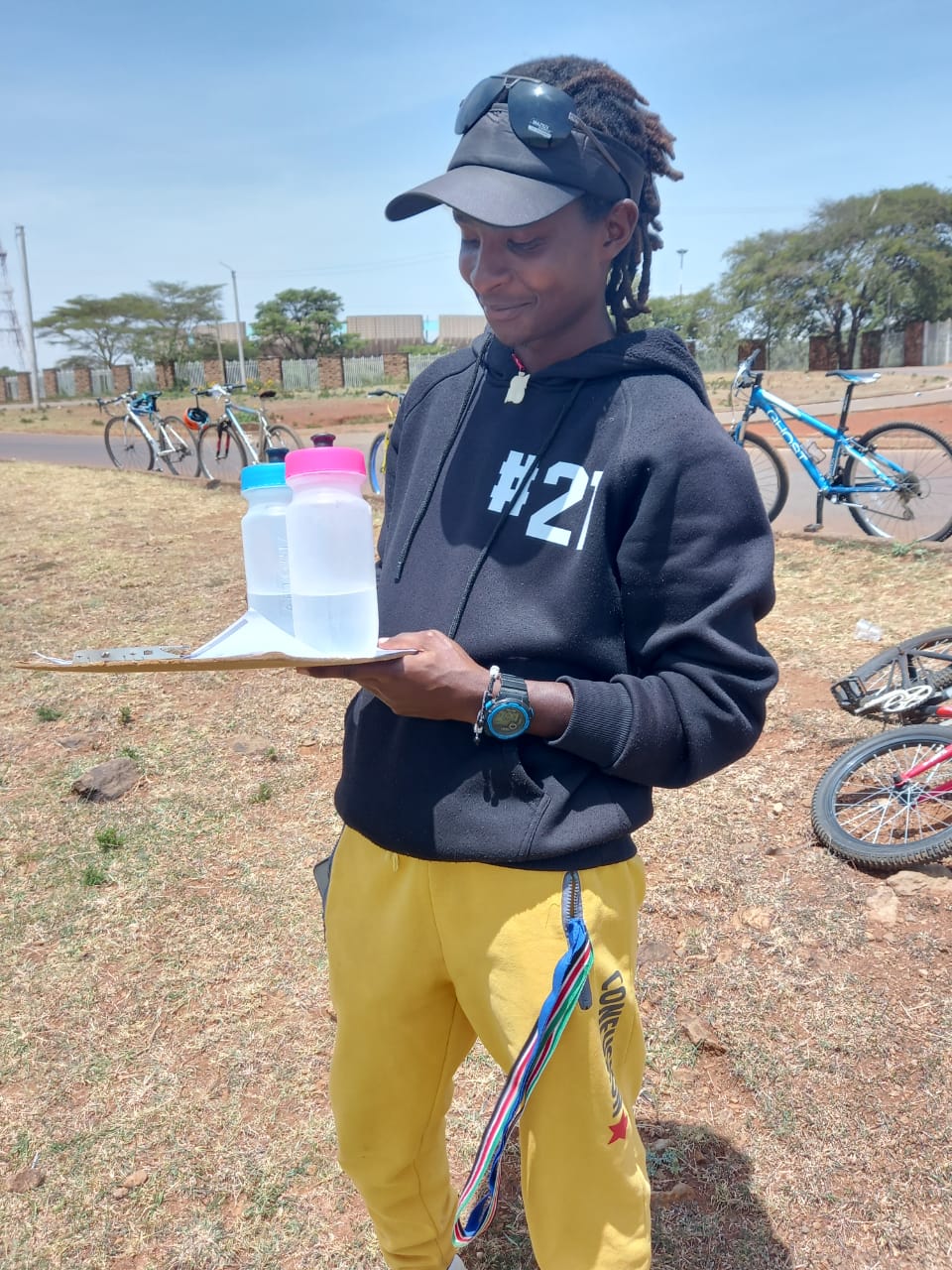

Yaaaaay, it’s Monday! Wait, you do like Mondays…right? (side-eye emoji).
I know I do since I get to host you here for a few minutes. 🙂 Mondays are just one of those days I look forward to. Those and rest days, hehe.
Last week we left off with a question, and asanteni sana for your overwhelming responses. Mental health really is a delicate topic, huh? Here’s the question we had from the last article:
Hi Coach Maina. I read your article for the first time last week thanks to a friend of mine who recommended it to me. I have heard that exercise can help heal some mental ailments like depression. Is this true?
Wow, this is a great question! Honestly, it did redirect me back to my notes and theory classes we take as part of the Physical Education course, and I couldn’t be more grateful for that. Thanks a lot! Now let’s see if we can make this make sense without going too much into the jargon. 🙂
Now, I wouldn’t want to suggest that there would be complete healing from (let’s use, for now) depression through exercise alone. I would even go so far as to suggest that depending on its severity, exercise is like a really effective pain killer to the effects of depression. As with any other ailment (even a leaking ceiling), it’s always best to deal with the root cause instead of painting over it. It’s important to make this distinction.
Our moods tend to be affected by hormones in the body. Cortisol – also called the stress hormone – is released when the body is under stress. Interestingly, when we exercise, the body is placed under stress, implying that some amounts of cortisol are released. After exercise, however, the feel-good effect is due to endorphins which suppress the effect of cortisol.
Even then, the main reason we feel good could be linked to the body not being in a stressful situation after exercise, thus endorphins take over. If one was to keep exercising endlessly, then there’s a chance the cortisol would dominate…which would possibly explain why you get irritated when the aerobics instructor goes on too long; or the coach is training you for more than the time you had signed up for; or you want to sit and cry when you ran further than you had intended, and are too tired to even imagine just how far you need to go to get back home.
The ultimate solution? As you pick exercise as a coping mechanism – and a way to keep you in shape – consider finding out what your stressors are that land you in a mental rut in the first place. And yes, it does suck when you are mentally attacked. Trust me, I would know. It’s the worst sort of affliction because, honestly speaking, you can’t see what’s bothering you and therefore can’t fight what you can’t see.
If you feel you are the person who, for one reason or another, have no one to talk to and are feeling lonely as a result, I would be interested to know if this works for you: take out your running shoes (or bicycle) and go out running (or cycling) and greet most of the other runners you meet along the way. A simple “Morning” or “Evening” will do as you pass each other. Every half-decent runner will reply – or at least try – to your salutation. Please let me know how this experiment goes. 🙂
Is it okay to change one’s exercise routine to one that suits them better? In this case, I have been working on my push-ups with the objective of getting as many reps as possible into a single effort/set, but lately it seemed to become frustrating. I managed to get to a maximum of 45, but I have been unable to progress further, and I am considering whether or not to change the goal from maximum reps to muscle-building. Please advise.
Hey there! Thank you for taking the time to pass by and leave this question. 🙂 I commend you for exercising as it is one hell of a way to remain fit and live longer and healthier. 🙂 But of course, you already knew that, right? Something else that has drawn me to your situation is your effort to look for something else that could work instead of merely giving up. Kudos!
I won’t say I am a fan of K-dramas, though surrounded by people who indulge in them, you get roped into one or two. One that caught my attention was “Twenty-Five, Twenty-One” whose plot is based on the sport of fencing. Anyway, so when the daughter was facing a wall in her career, the mum draws a curve that shows increasing progress with time and says, “People expect their progression in sports to be flawless like this curve”.
She then draws a staircase with each up-step edge touching the earlier curve she’d drawn and says, “Growth in a sporting career tends to be more of a staircase climb; it has growths (ups) and plateaus (flats)”.
Before I go on to substantiate this bit into the article, I saw another meme of an athlete that had the caption “I worked for 4 years to be this fast while others don’t see results and give up after two months”.
What’s the purpose of both stories? Well, growth is staggered, and you may as well be on the flats of the staircase. It is important for athletes in the professional life to understand this concept early on: training can become, and is, boring. There’s a certain monotony to it that surfaces at times, and I suppose that is part of the reason why professionals are rather few?
For recreational athletes, the same happens. The plus side? There isn’t as much pressure to perform in competitions or to beat other competitors. There also isn’t a rule that states one must stick to a certain activity or routine for the rest of their lives; hence flexibility (and creativity) is allowed.
In a classroom setting, it is possible for a certain teaching approach to fail, which then calls for creativity on the teacher’s part to effectively tackle the content in a manner than ignites learning. Unfortunately, not too many teachers (or coaches) realise this…and the results tend to speak for themselves.
In answer to your question, yes, it is allowed to shift if things aren’t working out. Best to highlight in uppercase that SHIFTING IS NOT SIMILAR TO QUITTING! Quitting involves dropping everything and staying down whereas changing the routine to suit your needs is a form of adaptation – perhaps that’s why the crocs have survived all these millennia?
Looking at completing push-ups with the objectives of increasing reps in an effort, you would be targeting power output, which combines strength and speed. Since you seem to have stagnated on reps progression, perhaps you have reached the limit power output of your current strength level. Therefore, shifting gears to increase your strength would ultimately lead to increased reps when you get back to it.
For those of us still new to the language, ‘reps’ stands for ‘repetitions’. Example: 30 reps of push-ups in a minute implies the number of push-ups you can do in a minute. Does this make sense?
And so, in conclusion, shifting your exercise from reps to strength-building will most definitely enhance your power-output training in the long-haul. Do you now see why Omanyala and Kipchoge will never have the same body type yet be the GOATS in their respective disciplines?
Being your own coach and trying to figure this all out on your own is quite the adventure, and I commend you for it. Keep it up! Let me know how it goes, and whether your new strategy will work out for you. 🙂
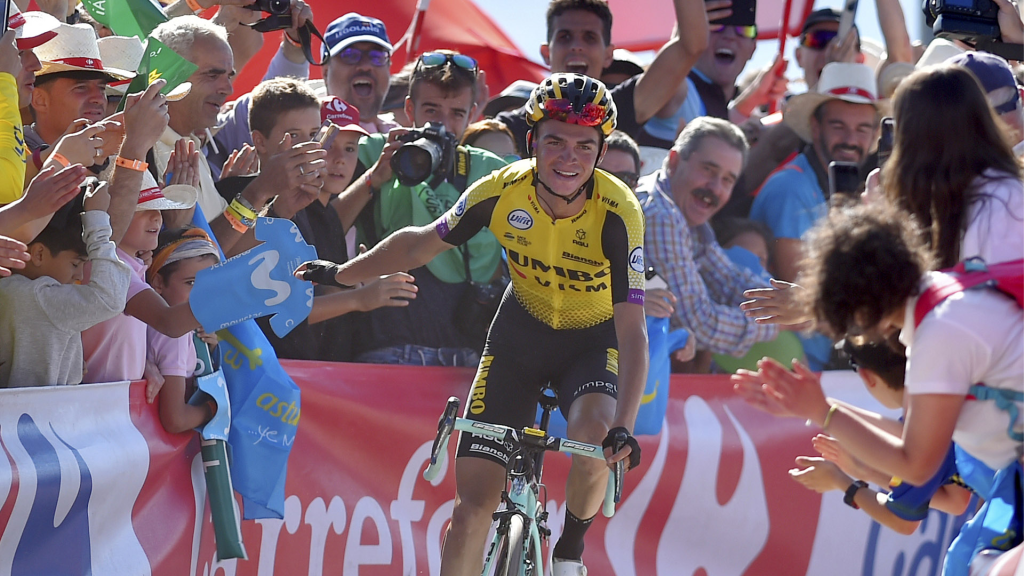
During this last week of the La Vuelta cycling race, there has been a lot of debate on whether or not Jonas Vingegaard and Primoz Roglic should let Sepp Kuss win the Tour. One side claims that he deserves it after he helped both of them win 2 other Grand Tours this year while the other side claims that the strongest rider should win it. Is it okay for athletes to ‘gift’ wins to others?
Tough, tough question this one. Yes, I have followed this discussion since it began, and boy, it has really split the field, hasn’t it? On one hand the stronger rider should win while on the other, the player who deserves the win should get it. Perhaps we can revisit the arguments proposed by both sides?
Competitive sports is basically that: competition. The objective? To determine who is the best, strongest, fastest…which can only be achieved when everyone gives their very best under those circumstances. In cycling sprint finishes, the best sprinter is the one who wins the bunch sprint; in time trials, the fastest rider on the course wins…that’s the way it is, and that’s what makes it exciting to watch. The more contested it is, the more entertaining.
In the La Vuelta General Classification this year, it’s clear that Primoz and Jonas are the best riders. Similarly, in the recently-concluded Tour de France, Jonas and Pogacar were the best two riders in the GC. The time trial made a dent in the time differences, of course, but at some point it had been so close that one wouldn’t have wanted to bet early on who would have won the Tour. That made it exciting, and that is the allure of competition in sports.
On the other hand, competition does tend to bring out the best in people. For example, when Ivan Fernandes in 2013 pushed on Abel Mutai to the correct finish line when the latter thought he had already finished the race thereby handing him his well-deserved win. What about when silver medalist Nigel Amos and Isaiah Jewett crossed the line together in the Tokyo 2020 Olympics after they collided and crashed during the 800m semi-final race? Amos could have chosen to go on and compete for a top finish, yet instead chose to help Jewett up and cross the line together.
Also, in the animation “Cars”, Lightning McQueen does give up his chance at his first Piston Cup when he helped The King cross the line after his crash.
These humane acts are termed “Sportsmanship” in sports, and history is full of them; they really do bring out the best in people in sports – and lots of tears.
Throwing in my 2 cents here, Jonas and Primoz have shown that they are among the strongest professional riders out there with each having had a Grand Tour victory this year alone! Primoz won the Giro d’Italia while Jonas won the Tour de France. In all these races, Sepp Kuss was there to protect them and put them in the right positions for the win. But hey, that was his contracted job!
True, Sepp Kuss wasn’t meant to be in the red jersey since he had come into the race as a domestique for both his leaders…but what is destiny? Does giving him the Tour win make it any less significant? I would say not because he has shown his mettle in this edition of La Vuelta. I mean, one doesn’t just land the Leader’s Jersey by chance, let alone keep it for a fortnight!
Jonas and Primoz helping Sepp earn the jersey is also a sign of nurtured growth, which is not something we see a lot in society – everyone trying to undercut the next person, especially in our current sports administration. Gosh. It gives hope, especially since they are in the same team (Jumbo Visma), that professional teams do actually help others grow and develop.
Sports is a beautiful thing, that’s for sure. In this case, Sepp has shown he’s one of the strongest riders in the La Vuelta and has therefore earned the red jersey. Would it be considered as a ‘gift’? Well, if someone does work for something, then a win is a positive reward, right? It’s unfortunate that the term ‘gift’ has a negative connotation to it. Perhaps it wouldn’t be a bad present to award one of your hardest working teammates who has shown he has the stuff?
Awesome, thanks for getting all the way here. It’s been a pleasure hosting you, and I hope to see you next week, same time same place.
Hey, before you go, how about we make a deal? Send me your sporting story either as a whole or a significant happening for you in your fitness journey, and I’ll put them up here in the coming weeks. You never know, you story might just motivate someone – in a similar situation to yours – to get started or keep going. You can send them to josemariambui@gmail.com
I look forward to hearing from you. 🙂
Cheers!
 WHO'S WORLD OF FANTASY WILL YOU DIVE INTO NEXT?
Leave a comment