One word: everyone.
There are two ways to tackle this question, and though I will touch on both, you’ll find that more emphasis will be laid from the athlete’s angle. Or rather, around the life of an athlete.
Fitness and exercise belongs to anyone who is living and breathing! That cannot be stressed enough. In order to remain healthy and stand a fighting chance against illness and disease, one should always strive to do some form of exercise, even if it is the one-kilometre walk to the train station or the 30-minute morning/evening jog.
You think an apple a day keeps the doctor away? Try being physically active. Not only is it cheaper (than consistently buying apples), but it’s also great fun and leaves a lasting-euphoric effect. Talk about great sleep.
On the other side, as much as a sport is played by an athlete, it is the surrounding society that majorly determines their success.
Take Eliud Kipchoge for instance: he comes from a community known for their running prowess. It can be argued that not only are the children born running (possibly not kicking in the womb, haha), but also encouraged to run by their parents and extended family.
A morning spent in Iten is proof of the statement above. Either in groups or alone, runners run up and down the road between Biretwo and Iten, and some upto Eldoret. Small wonder that most (if not all) Kenyan runners are from there.
What about the big cycling names such as Chris Froome, Remco Evenopoel and Rohan Dennis? These are born and bred in great cycling nations where the sport is a part of the culture.
Let’s also mention soccer. Whether it’s playing Fifa or watching a soccer game on TV, the sounds of the thousands of fans in the stadium is a statement that the sport belongs to the people for the people by the people, much like democracy (as it should be).
In all these scenarios, it is closely accurate to say that these athletes would not be the superstars they are today if not for their societal backgrounds. Listen to a cycling commentator, for example, mentioning that a certain rider is racing in the memory of a certain parent or for an Italian nation (especially during the Giro d’Italia).
In my experience as a coach, I have observed that the players/athletes who tend to perform better or progress faster (with all things constant) are those who have societal support, including the immediate family members.
I do have a deep-found respect for parents who find the time to accompany their child not only to a training session but also to a race or game, and share in all the moments of that athlete.
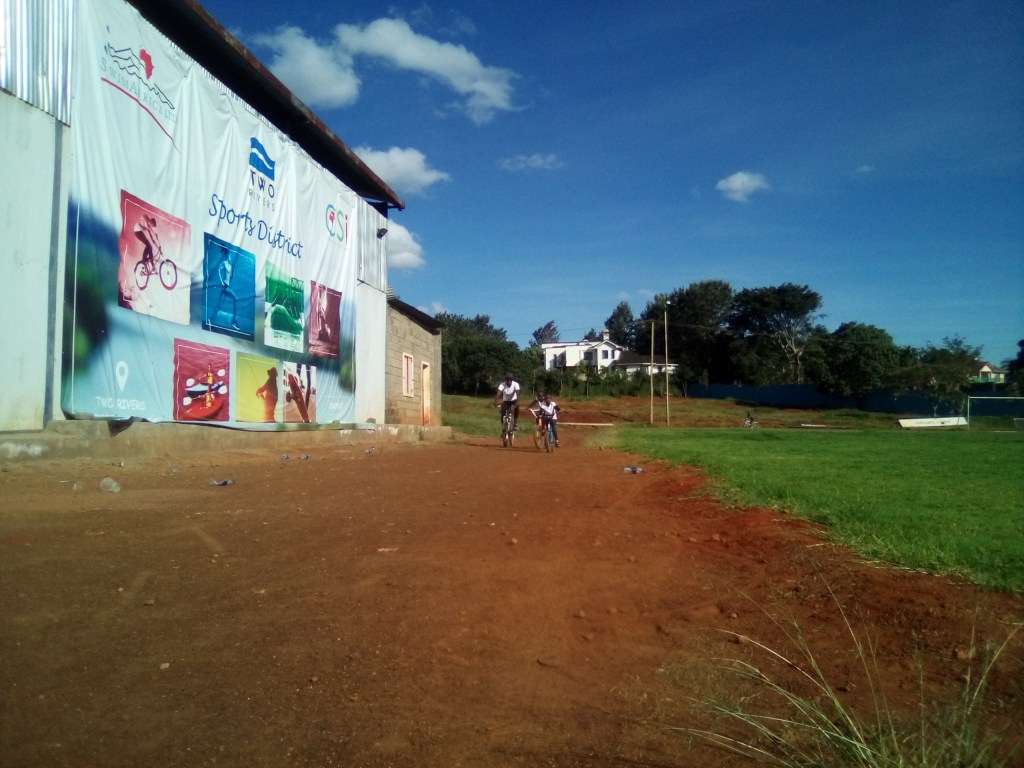
Not too long ago, I hosted a family at the Two Rivers Sports District, and all four of them were on their bikes! And guess what? The mum had learnt to ride a bike only the day before, and the youngest son gained his confidence during the session!
It is my intention, through my brand Duo-Bearings Africa, to actively engage all members of the society as much as possible (especially if they have an athlete of interest in a certain sport) so as to inculcate the culture of “our sport, our athlete”.
You want better soccer players? Or better swimmers? Or better cyclists? Then get into their athletic life and be a part of it. You might be surprised as to how much your contribution might have on their career.
DISCLAIMER: this is a fully opined article. Thus, feel free to agree or disagree in the comments below!
Also, visit us at the Two Rivers Mall Sports District where we have a nice package for the family (and extended relations if possible!)
 WHO'S WORLD OF FANTASY WILL YOU DIVE INTO NEXT?
Leave a comment